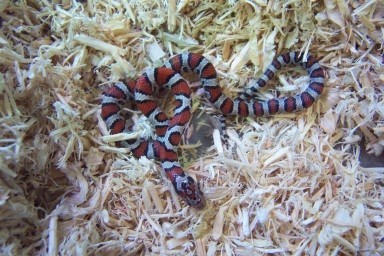
AL red milk
by mattbrock
Feb 2, 2004 9:24 AM · 1138 views · 53.6 k · 384 x 256
I thought I would start a healthy debate on here. These are L. T. Syspila offspring from a WC pair in Madison, Alabama. Intergrades with L. T. TriangulumXSyspila are found a couple of counties east of there. Dr. R.H. Mount classifies these as Syspila, as well as Conant/Collins. They have features similar to Triangulum, such as the first body saddle being connected to the head pattern, and quite a few more saddles than most Syspila. But, the parents are definately Syspila. I just wanted to hear some of your comments.
Matt
Matt
Comments (4)
DEEK
Feb 3, 2004 1:47 PM
Syspila from that area do have a triangulum influence on some, others look like pure syspila, like your adults you have said, but they can produce offspring like this so it is definately in ther genes, however I have found syspila with the first band connecting the head patern in central western missouri and on a specimen that was from the western border of their range in kansas so that is also a trate of syspila, just not a common one. However the head patterns on your offspring look exactly like L.t.triangulum, and the blotches are also more like triangulum, I would have to say that the locality of your snakes are intergrades, unless the parents were from two diferent localitys, and how do you know that yours are true syspila? it doesn't make the qaulity of the snakes not as good, they are natural intergrades between some of the best triangulum subspecies. Post a pic of the parents also, I wish I had pics of the syspila I found in Missouri and Kansas with the blotch connecting to the head pattern, to show you the difference. Kirk Setser also has found syspila from missouri with the band connecting the head patern here is the link, there is two examples, (http://www.tbcnet.com/~gknaack/slither/kirks/sysp.html)There is a clear difference.
Just my two cents
Just my two cents
mattbrock
Feb 3, 2004 3:09 PM
Hey Deek, the parents of these snakes I don't have pictures of, but if I'm not mistaken the majority of the Lampropeltis T. ssp. in the county they were collected are considered to be syspila. That doesn't necessarily mean they are pure, with no eastern influence. As anyone can see thet have characteristics of both syspila and triangulum, and they are considered to be VERY close to the point of natural intergration. The farther east you go in N. AL the more they resemble easterns, having many more saddles and a much darker pattern. And in west AL there are definately pure reds, but Dr. Mount touches on this in pretty good detail in his book Reptiles and Amphibians of Alabama. They are still considered a confusing complex of snakes in our state. I can say the parents of these two are some of the most beautiful red milks I have ever seen. I hope these turn out to be as nice as them. Thanks for your input.
Matt
Matt
mattbrock
Feb 3, 2004 3:32 PM
Deek, Kirk S. website is awesome. He has pics of Madison, Al red milks on there thet are very representative of the animals from that locality.
chad ks
Feb 10, 2004 1:02 AM
Hey Brandon, whats up? Man those syspila are so variable. Of course I believe Madison Alamamas to be intergrades myself, simply because of the variation in offspring. I remember finding a few milksnakes in western Misouri that definately had traits of triangulum. Have fun sport.chad (the sociopath....hahahaha)
